The War Room
We have been so comfortable for so long that we have forgotten what the word used to cost.
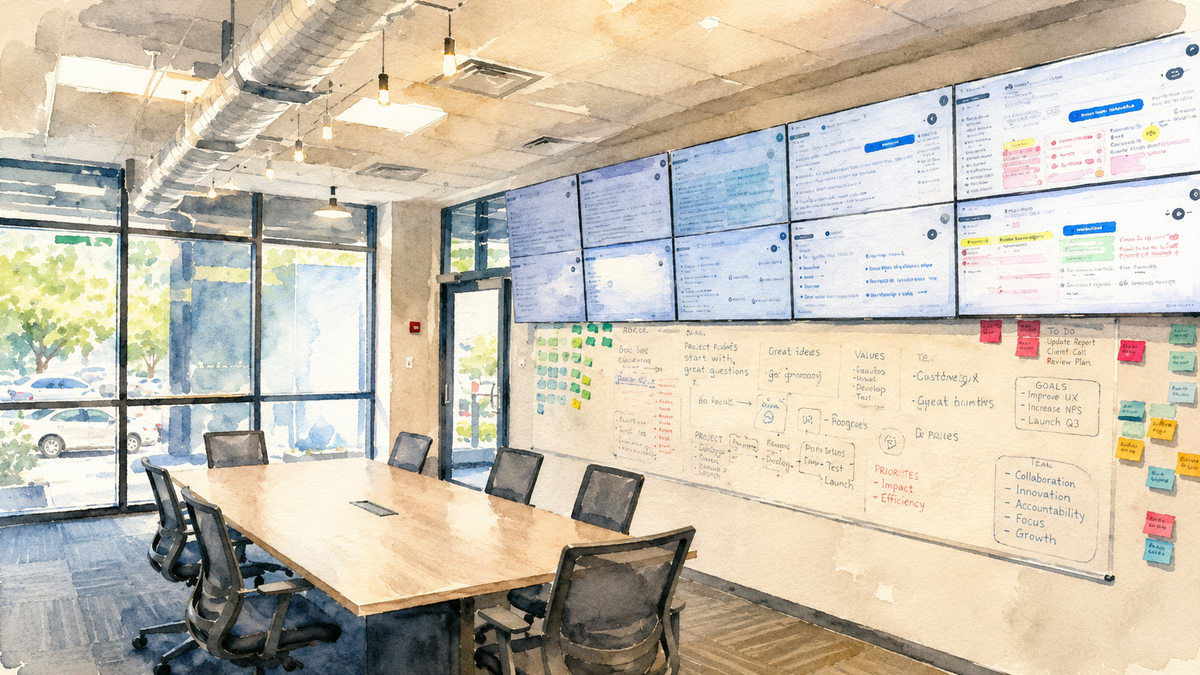
We were in a meeting, the kind with a lot of executives reporting on a lot of in-flight things, when one of my peers said her team was standing up a war room for the launch.
I knew what she meant. A temporary space where people on alert. Their eyes on dashboards, ready to react if something broke. It is a reasonable thing to do for a big go-live. She was being thorough and I understood every word of it.
And still something snagged.
The worst thing that can happen in her war room is a product failure. A website goes down, a workflow breaks, a rollout that took eighteen months doesn't perform the way the deck said it would. These things are genuinely unpleasant. They cost money. They create bad weeks for a lot of people. They are worth taking seriously.
Yet, they are not war.
But here is the thing: we have assigned them the language of war because inside our offices, inside our climate-controlled rooms with our catered lunches and our six-figure salaries, a product failure is the worst thing we can imagine. It is the ceiling of our professional catastrophe. So we reach for the most serious word we have, and the most serious word we have is borrowed from something none of us have actually seen.
This is a generation that has not watched a husband get drafted. Has not listened for a name on a list. Has not learned to read a telegram the way you learn to read a face, scanning for the news before the words arrive. The last Americans who carried that knowledge in their bodies are almost all gone now. What remains is the vocabulary, floating free of the experience that gave it weight, available to anyone who needs to signal that something is serious.
So we use it for launches.
I want to be clear that I am not judging the word choice. Language drifts. That is what it does. Words travel away from their origins and land somewhere new and nobody is required to carry the whole history of a word every time they use it. My colleague was not being callous. She was being precise in the only language available to her for a high-stakes monitoring situation, which is to say the language of stakes she has actually known.
But I am a person who notices things. And what I notice is that a word that once meant the place where someone decided which direction to send other people to die now means the place where we watch to see if the software holds. That journey tells you something about what we have decided counts as serious. About what we have decided counts as a crisis. About how completely we have convinced ourselves that the work we do in these buildings is the most important thing happening anywhere.
It isn't. It is useful, sometimes. It creates things people need, sometimes. It is worth doing with care and yes, even with a monitoring team on standby.
But the room we are sitting in when the website goes down is not a war room. It is a conference room with good wifi and someone's leftover birthday cake in the corner. And the fact that the word fits so easily, that nobody in the meeting paused, that I paused only on the inside and then kept going because what would I even say, that is the history lesson.
We have been so comfortable for so long that we have forgotten what the word used to cost.
XOXO,